|
WINTER 2025
ESCP Newsletter Winter 2025 |
| |
|
Dear colleagues,
The turn of the year is a time for reflection and new expectations.
Clinical pharmacy is a discipline grounded in science and education. We work with evidence, guidelines, and research results, yet at its heart is always a real person – patient, colleague, team. Humanity, empathy, and professional responsibility go hand in hand with scientific excellence and high-quality education.
ESCP plays a key role in supporting clinical research, translating evidence into practice, and lifelong learning for clinical pharmacists. Our symposia, workshops, webinars, and professional initiatives provide spaces where science meets everyday clinical reality.
This period is also one of continuity and renewal. Some colleagues in our committees have completed their terms – I sincerely thank them for their time, energy, expertise, and dedication to our society. Their contributions have strengthened and established solid foundations on which we can continue to build. Continuing members provide stability, new members bring fresh perspectives, both of which are essential for ESCP’s continued development in a dynamic environment.
ESCP is a community where people meet, collaborate, and inspire one another. I look forward to seeing many of you at the Spring Workshop in February in Innsbruck, at the Autumn Symposium in October in Almada, and during our monthly webinars, which are an important part of our educational mission. I also warmly encourage you to actively participate in Special Interest Groups – these are where networks, international collaborations, and projects emerge, driving clinical pharmacy forward.
Remember to renew your ESCP membership, or consider joining if you are not yet a member. Your support and active participation give ESCP its true strength and purpose – and bring you valuable benefits as well!
Thank you for your interest, support, and active participation in the life of our society. I look forward to continuing our shared journey, strengthening ESCP as a dynamic, scientific, educational, and collaborative professional society.
I wish you good health and joy in work that has professional and human significance in the coming year.
PF 2026!
 Anna Oleárová, ESCP President & Editor Anna Oleárová, ESCP President & Editor
Do you have any updates, comments, feedback, or short reports on your experiences with ESCP? Do not hesitate and send us your contribution to the next issue to: olearova(at)ru.unb.sk |
| |
|
Let’s look back at the 53rd ESCP Symposium 2025 in Grenoble |
| |
|
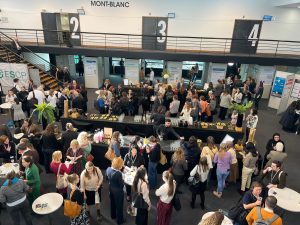
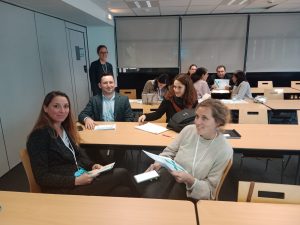
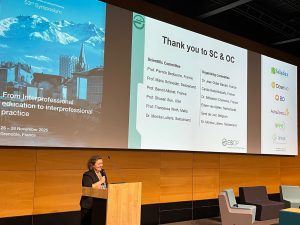
The 53rd ESCP Symposium 2025 took place at the end of November in Grenoble on “From Interprofessional Education to Interprofessional Practice.” The event brought together almost 400 participants from 44 countries for inspiring plenary lectures, interactive workshops, poster and oral presentations, and lively expert discussions on current challenges and innovations in clinical pharmacy.
Thank you to everyone involved in the organisation and smooth running of the symposium. Discover more in our report.
|
| |
|
New ESCP SIGs officially kicked off |
| |
|
During the 53rd ESCP Symposium in Grenoble, two new Special Interest Groups (SIGs) were officially launched: Antimicrobial Stewardship (AMS) and Pharmacogenomics and Personalised Pharmacotherapy. The AMS SIG also held an additional online meeting to enable participation by members who were unable to attend the symposium in person.
In addition to these newly established SIGs, SIGs in Deprescribing, Mental Health, Cardiology, and YESCP are currently active within ESCP. Membership in ESCP SIGs is open exclusively to ESCP members.
SIGs bring together members with shared interests in their specific fields and support professional development and collaboration. If you are interested, please apply or contact the SIGs via our website and members-only zone. |
| |
|
Introducing the ESCP Research Committee |
| |
|
Usually, this section highlights publications — and explains why they caught the attention of our Research Committee (ResCom). This time, however, we are introducing the ResCom itself. Prof. Betül Okuyan, the new Chair, and Prof. Martin Henman, the Past Chair, shared their visions with us.
1. What is the role of ResCom within ESCP?
The Research Committee of the ESCP aims to contribute to the vision of ESCP by advancing clinical pharmacy research, evidence and innovation. It offers a platform for researchers to present their research, to support researcher development through training, provision of a masterclass, workshops and webinars. These are offered via the Annual Symposium or through research training materials uploaded on the website. ResCom also provides a wide network of clinical pharmacists and international researchers to engage with and it conducts research in topical areas relating to clinical pharmacy in Europe.
Our values are innovation and excellence in clinical pharmacy research demonstrated by impact on patients, health systems and society, sustainability in research skills support offered to ESCP members, building a strong research community within ESCP, and multidisciplinary collaborations in clinical pharmacy research.
2. Which areas of clinical pharmacy research does ResCom currently focus on?
Last year, an article about the research priorities of ESCP members was published in the International Journal of Clinical Pharmacy (IJCP). This study identified the views of ESCP members on the areas of research that should be prioritised in order to deliver research support, research projects and education. Based on the findings, we plan to work with the General Committee to conduct new studies and develop educational resources.
In another study which was led by Prof. Vibhu Paudyal, we reviewed the scope of clinical pharmacy guidelines and assessed the extent to which they conform to quality standards. We are currently collaborating with our new members to develop high-quality clinical pharmacy guidelines using a systematic approach.
Recently, an umbrella review led by Prof. Anita Weidmann about current practices on prescribing and deprescribing for patients on long-term antibiotic treatment for chronic pulmonary conditions was published.
3. Who are the members of ResCom, and what perspectives do they bring?
Martin and I joined the committee in 2017. The committee chair was Prof. Derek Stewart (former ESCP President) in 2017, after which Prof. Vibhu Paudyal took over. After the symposium held in Prague in 2022, Martin and I became chair and vice-chair, respectively. This year, Prof. Cathal Cadogan and Dr. Ankie Hazen completed their second term on our committee. Prof. Monika Lutters, an ESCP Past President, was also one of our ESCP General Committee representatives for a long time. We have members from Austria, Malta, Italy and Türkiye. This year, we have four new members from UK, Netherlands, Switzerland and Belgium. Martin is working as a past chair this year, while I and Francesca are acting as chair and vice-chair respectively. All of our committee members are highly qualified and eager to take on their roles. Our goals will be achieved as a result of their dedication, expertise and commitment to the committee. We would like to thank all our former and current members.
4. What types of projects or initiatives is ResCom involved now?
In addition to our usual tasks, our priority this year is to improve the quality of the abstracts submitted to ESCP events. We have developed ESCP guidelines to promote high quality abstracts submission and presentation. We have collaborated with Dr. Joanne Brown from the Education Committee. We are considering organising a webinar and providing resources to support those submitting abstracts led by Prof. Antonella Tonna. We are also considering collaborating with YESCP SIGs to organise a webinar. In last year, Prof. Francesca Wirth and Dr. Joanne Brown ran the YESCP webinar to support the young ESCP members’ poster and oral communication presentation. We are also working on a standard operating procedure (SOP) for a new type of session at the Annual Symposium, which will be used to discuss case reports and clinical practice among our members.
5. How does ResCom support or encourage research within the ESCP members?
The ESCP Research committee began preparing educational materials entitled “How to…” series in 2020. This series helps improve and promote ESCP members’ skills while conducting clinical pharmacy research. These are available on ESCP website for the members. We have worked on three commentaries for the IJCP. We prepare IJCP Highlights for ESCP Newsletter. We take responsibility for selecting ESCP financial support receivers and best poster and oral communication awards. We developed and implemented the SOP for a ESCP Research funding in 2018. We compile the list of other research funding opportunities from other organisations, and it is available now on the ESCP website for the members. We invite the committee members and also experienced members of ESCP to take part in our studies. We have collaborated in Erasmus BIP events led by Prof. Daniela Fialova.
6. Are there any highlights, trends or challenges in clinical pharmacy research you see as important right now?
Testing AI techniques for modelling and data analysis. Implementing and sustaining pharmacogenetic services in clinical pharmacy. Astropharmacy.
7. How can ESCP members connect with or contribute to the ResCom’s work?
They can send us an email: mhenman(at)tcd.ie and/ or betulokuyan(at)gmail.com.
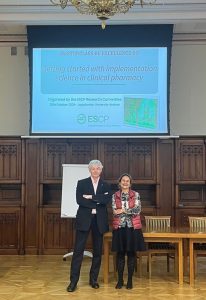
Dear Betül and Martin, thank you very much for sharing your time and insights with us. We wish you and all members of the Research Committee continued success, energy, great ideas, and enthusiasm. |
| |
|
Financial support to attend the Grenoble Symposium |
| |
|
Each year, ESCP actively promotes the education of clinical pharmacists from developing countries. One way it does this is by making the ESCP Symposium more accessible to pharmacists from these countries through financial support.
For the 53rd ESCP Symposium in Grenoble, ESCP supported Assoc. Prof. Dr. Nilay Aksoy and MSc. Pharm. Mustafa Külcü, both from Turkey. Read on to discover the insights and experiences shared by them during their time at the symposium. |
| |
|
1. Assoc. Prof. Dr. Nilay Aksoy
Dr. Aksoy, where do you work?
I work at Altınbaş University at the Bakırköy Health Campus in Istanbul, Turkey.
What is your current position?
My current position is Associate Professor. I also serve as the Head of Vocational Sciences Departments, Clinical Pharmacy and the Health Management Department (Postgraduate).
What is your current field of clinical pharmacy work?
My work is centered within the Department of Clinical Pharmacy. Serving as lecturer for pharmacotherapy and clinical pharmacy lectures and practices.
What are your interests in clinical pharmacy?
My primary research and clinical interests focus on Oncology Pharmacy, Rational Drug Use, Digital health and Medication Adherence. I am particularly dedicated to improving patient outcomes through patient-centered care and the management of drug-related problems in complex conditions.
How did you hear about ESCP?
I first became acquainted with the ESCP during my doctoral studies at Marmara University. My interest was initially sparked by my professors, who were active and prominent members of the society. Their dedication to the field and their involvement with ESCP’s international network inspired me to join as a member to further my own contributions to clinical pharmacy research and practice.
What were your main reasons for wanting to attend this symposium?
My primary motivation for attending the ESCP symposium is to engage with the international clinical pharmacy community and exchange best practices in oncology pharmacy and medication adherence. As a researcher deeply involved in rational drug use and an active member of the society, I aim to present my recent findings on patient knowledge and digital health solutions to a global audience.
Can you briefly describe the study you presented at the symposium in Grenoble?
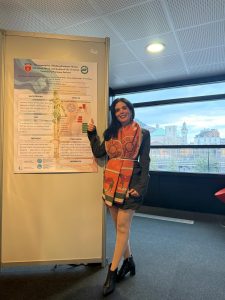
At this symposium, I presented a study entitled "The Association of Reduced Immune Fitness with Sleep, Mood, and Quality of Life of Turkish Community Pharmacy Patients". This research involved a survey of 450 patients to evaluate how modifiable lifestyle factors impact the body’s ability to respond to health challenges. Our findings demonstrated that a healthy diet, high sleep quality, and positive mood are significantly correlated with stronger immune fitness, while factors like anxiety and fatigue have a negative impact. The study's impact lies in highlighting the crucial role of clinical pharmacists in educating the general population on these lifestyle factors to proactively improve immune health and overall quality of life.
What did you gain most from attending the symposium?
Participating in the symposium allowed me to strengthen my international network and exchange best practices in patient-centered care with colleagues across Europe. I gained deeper insights into the digitalization of health solutionsand the management of medication adherence. Presenting my research on immune fitness and its correlation with lifestyle factors provided me with valuable peer feedback, reinforcing the importance of the clinical pharmacist’s role in public health education. This experience has broadened my perspective on how to bridge the gap between academic research and community pharmacy practice.
What are your plans for your clinical pharmacy work?
Moving forward, I plan to continue my leadership at Altınbaş University by integrating international standards and innovative tools like virtual simulations into our pharmacy curriculum. I am committed to advancing research in Oncology and Pharmacotherapy, with a specific focus on optimizing treatment outcomes and reducing drug-related problems in cancer patients. Additionally, I plan to expand my research into how digital health solutions and lifestyle counseling can be utilized by community pharmacists to improve the quality of life and immune health of the population. My goal is to continue developing evidence-based interventions that emphasize the pharmacist's role as an essential educator in the healthcare system.
|
| |
|
2. MSc. Pharm. Mustafa Külcü
Mr. Külcü, where do you work?
I have been working as a pharmacist at Süreyyapaşa Chest Diseases and Thoracic Surgery Training and Research Hospital for approximately 12 years. I am also a master's student in Clinical Pharmacy at Marmara University Faculty of Pharmacy.
What is your current position?
I am the head pharmacist at the pharmacy of Süreyyapaşa Chest Diseases and Thoracic Surgery Training and Research Hospital.
What is your current field of clinical pharmacy work?
Currently, I am working in clinical pharmacy, conducting research in the areas of drug literacy, drug adherence/compliance, and drug-related problems.
What are your interests in clinical pharmacy?
In clinical pharmacy, I am interested in areas such as drug and treatment monitoring, rational drug use, patient education, pharmacoeconomics, pharmaceutical care, the role of the clinical pharmacist in the treatment of acute and chronic diseases, drug consensus, etc.
How did you hear about ESCP?
I heard about ESCP through Prof. Dr. Mesut Sancar, Head of the Department of Clinical Pharmacy at Marmara University Faculty of Pharmacy and also my master's thesis advisor, and Prof. Dr. Betül Okuyan, with whom I conducted my thesis research.
What were your main reasons for wanting to attend this symposium?
My reason for wanting to participate in this symposium was to closely follow current and new developments and ongoing academic studies in the field of clinical pharmacy, and to learn how to approach these same topics from different perspectives.
Can you briefly describe the study you presented at the symposium in Grenoble?
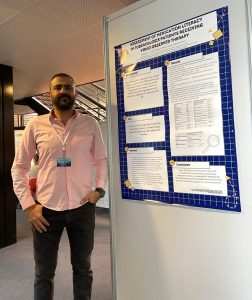
I presented a poster titled "Assessment of Medication Literacy in Tuberculosis Patients Receiving Video Observed Therapy" at the ESCP symposium held in Grenoble from November 26-28, 2025. The aim of this study was to identify medication literacy in tuberculosis (TB) patients receiving video observed therapy. This descriptive study included TB patients (18 years and older) who received VOT at an outpatient of clinic of a tertiary hospital April to November of 2025. Characteristics of the participants (age, gender, years of education, self-reported socioeconomic status, duration of TB, smoking status, comorbidities, family history of TB and medication utilization) were collected. The Medication Literacy Scale for Adults (MELSA) Version 2 was used to evaluate medication literacy. The Sıngle Item Literacy Screener evaluated reading ability regarding health-related information. The Turkısh Version of the Medication Adherence Report Scale (MARS-5) was administered. Some TB patients receiving VOT were still nonadherent to medications. Assessing medication literacy is essential for developing and implementing personalized interventions that promote medication adherence in this patients.
What did you gain most from attending the symposium?
By participating in this symposium, I was able to closely follow the latest developments in clinical pharmacy in Europe and the current studies conducted in different European countries, thereby enhancing my professional knowledge. Furthermore, meeting colleagues and expert participants helped me build a strong network.
What are your plans for your clinical pharmacy work?
I plan to pursue a doctorate in clinical pharmacy, conduct academic research, and publish internationally.
I would like to express my gratitude once again to the ESCP for the financial support you provided and for your contribution to my professional development.
|
| |
|
Dear both, thank you for the interview. We wish you every success in advancing clinical pharmacy in your country. |
| |
|
December 2025 issue of IJCP has been published |
| |
|
The December 2025 issue of the journal was recently published.
Check out the great selection of reviews, research papers, commentaries and much more.
There are two ESCP Best Practice Papers: one on the development of the national methodology for the provision of clinical-pharmaceutical care and its implementation in the healthcare system of Czech Republic, and another on the development, implementation and evaluation of a practical risk assessment process for the introduction of new medicines to clinical practice at an acute hospital from the United Kingdom.
Plus much more. |
| |
|
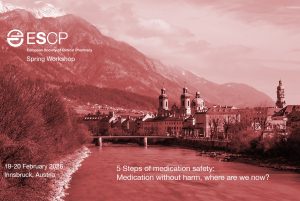
We are proud to invite you to the ESCP Spring Workshop, taking place in Innsbruck, Austria, on 19–20 February 2026.
This Workshop will focus on 5 Steps of Medication Safety: Medication Without Harm – Where Are We Now?
|
| |
|
ESCP WEBINARS
Don't miss the opportunity to join the ESCP webinars, led by exceptional speakers from across the field. 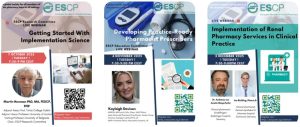
ESCP members are welcome to attend the webinars free of charge. Non-members are asked to pay a small fee.
The schedule for the first half of 2026 will be available soon. |
| |
|
SAVE THE DATE!
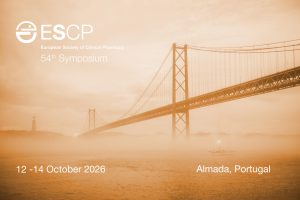
The 2026 Autumn Symposium will take place in Almada, Portugal, from 12 to 14 October 2026. The theme will focus on the Transition of Care.
|
| |
Join ESCP (become a member)
Join ESCP today and help to strengthen our clinical pharmacy community. We are a global society for all members of the pharmacy team in all settings.

|
| |
European Society of Clinical Pharmacy
Snijderseweg 5, NL-4861 PJ Chaam, Netherlands
© ESCP
| |
|